What Happens When an Algorithm Reads the X-Ray Before the Radiologist
By André Leite and Vinícius Lain, authors of AI in Healthcare.
An X-ray, CT or MRI image doesn't reach the physician as a finished picture ready to be read by the naked eye. It arrives as millions of pixels, each carrying a tiny piece of information that, added to all the others, forms a pattern. Finding patterns in massive volumes of visual data is exactly the kind of task at which artificial intelligence has proven surprisingly good in recent years.
A concrete case illustrates this better than any theory. An automated reporting technology developed in China was adopted by Unimed Serra Gaúcha (part of Unimed, a Brazilian network of physician-owned health cooperatives and insurers), making it a pioneer in Brazil for this type of application. In practice, imaging studies go through algorithmic triage before, or alongside, the radiologist's review, flagging findings that deserve priority attention and shortening the time between the exam and the identification of an urgent problem.
The key point is not that the machine "reads better" than the physician in some absolute sense. It reads differently: no fatigue at the end of a twelve-hour shift, no expectation bias from what it has seen in the last few studies of the day, and able to process a volume that no human team, however large, could review at the same speed. The radiologist remains irreplaceable for putting the finding in context, correlating it with the clinical picture, deciding on management and explaining it to the patient. AI doesn't replace that judgment. It shortens the time between "the image exists" and "someone competent has looked at what matters in it."
That difference, between replacing judgment and speeding up triage, is what separates a serious application of artificial intelligence in healthcare from marketing hype. Radiology was one of the first specialties to feel the impact because its work was already, in essence, image analysis at scale. Other specialties will feel the same shift as their own data (text, sound, vital signs) becomes as structured and abundant as a CT scan.
The real lesson from the Unimed Serra Gaúcha case isn't technological. It is about management: the difference between adopting early, with sound judgment and robust clinical validation, and waiting for the technology to "mature" while patients keep waiting for a report that could already be faster, safer and in the hands of the person who needs to decide.

Keep reading
AI in Medicine
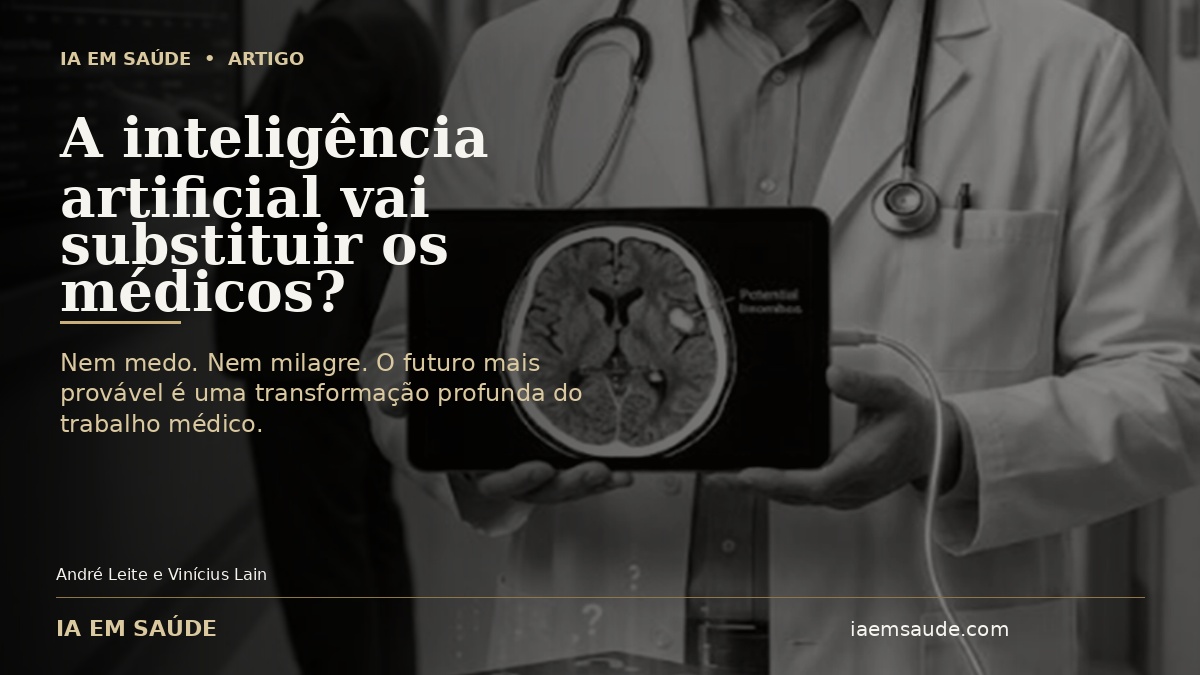
Will Artificial Intelligence Replace Doctors?
Artificial intelligence is likelier to transform medical work than replace it. Learn what the machine can take over, and what remains essentially human.
AI in Medicine
The Silence Before Code Blue: How AI Can Predict a Patient's Deterioration
Predictive medicine and early sepsis detection: how continuous data can anticipate an emergency before it happens.
AI in Medicine
The Hospital Without Walls: When the Hospital Bed Is the Patient's Living Room
Hospital at Home and remote monitoring: how AI makes it safe to treat at home patients who once would have needed admission.